

Documentation

Docs

Introduction

What is rune

Philosophy

Why rune

Architecture

Getting Started

Installation

Quick start

Project structure

The dev loop

Tutorial: build an app

1. Create the app

2. Pages & routes

3. Layouts

4. State with Mimir

5. SSR & data

6. API routes

7. Styling

8. Build & deploy

Core Concepts

The application object

Rendering pipeline

Hydration

The build manifest

Configuration (ekko.json)

Permissions

Conventions

Routing

File-based routing

Dynamic routes

The router (useRouter)

Navigation & Link

Guards & redirects

Programmatic routes

Server-Side Rendering

Overview

The ssr() function

Strategies (eager/lazy)

SSR → hydration

Caching & invalidation

SEO

Mimir, state management

Overview

Atoms

Reading & writing

Selectors (derived state)

Subscriptions & the store

SSR & hydration

Persistence & sessions

Patterns & recipes

Pitfalls

Pages & Layouts

Pages

Layouts

Error & not-found

API Routes

Defining routes

Request & response

Middleware

helmet

cors

rateLimit

bodyLimit

validateContentType

csrf

requestId

timeout

errorHandler

httpsRedirect

secureCookies

ipFilter

safePath

Validation & options

Styling & Theming

SCSS

Theming (light/dark)

Asgard integration

No flash (no-FOUC)

Building & Deploying

The build

Static assets

Production deploy

API Reference

ekko:rune

ekko:rune/router

ekko:rune/mimir

ekko:rune/seo

ekko:ssr / css

ekko.json schema

CLI commands

Guides

Rune app from scratch

Recipes

Dark mode

Forms

Data fetching

Authentication

Pagination

FAQ (use cases)

Documentation

Docs

Introduction

What is rune

Philosophy

Why rune

Architecture

Getting Started

Installation

Quick start

Project structure

The dev loop

Tutorial: build an app

1. Create the app

2. Pages & routes

3. Layouts

4. State with Mimir

5. SSR & data

6. API routes

7. Styling

8. Build & deploy

Core Concepts

The application object

Rendering pipeline

Hydration

The build manifest

Configuration (ekko.json)

Permissions

Conventions

Routing

File-based routing

Dynamic routes

The router (useRouter)

Navigation & Link

Guards & redirects

Programmatic routes

Server-Side Rendering

Overview

The ssr() function

Strategies (eager/lazy)

SSR → hydration

Caching & invalidation

SEO

Mimir, state management

Overview

Atoms

Reading & writing

Selectors (derived state)

Subscriptions & the store

SSR & hydration

Persistence & sessions

Patterns & recipes

Pitfalls

Pages & Layouts

Pages

Layouts

Error & not-found

API Routes

Defining routes

Request & response

Middleware

helmet

cors

rateLimit

bodyLimit

validateContentType

csrf

requestId

timeout

errorHandler

httpsRedirect

secureCookies

ipFilter

safePath

Validation & options

Styling & Theming

SCSS

Theming (light/dark)

Asgard integration

No flash (no-FOUC)

Building & Deploying

The build

Static assets

Production deploy

API Reference

ekko:rune

ekko:rune/router

ekko:rune/mimir

ekko:rune/seo

ekko:ssr / css

ekko.json schema

CLI commands

Guides

Rune app from scratch

Recipes

Dark mode

Forms

Data fetching

Authentication

Pagination

FAQ (use cases)

validateContentType()

Reject requests whose body is not a content type you accept, with 415 Unsupported Media Type.
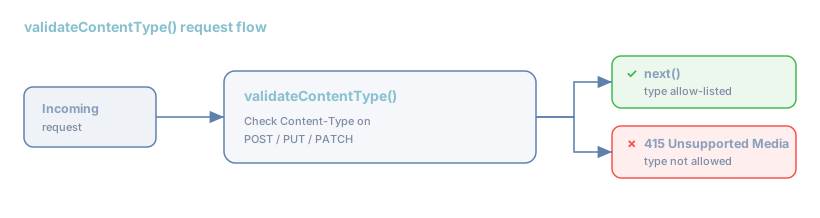
validateContentType request flow

Use case

A handler that expects JSON should not have to defend against a form-encoded or text/html body. Enforcing the content type up front defends against type-confusion bugs and sloppy clients, and keeps your parsing code honest: by the time the handler runs, the body is a type it knows.

How it works

It applies to body methods (POST, PUT, PATCH) and compares the request's Content-Type (ignoring parameters like ; charset=utf-8) against the allowed types list, by exact match. A mismatch, or a missing content type when allowEmpty is off, replies 415 Unsupported Media Type. GET/HEAD/DELETE pass through untouched.

Configuration

OptionDefaultNotes
typesapplication/json, text/plain, application/x-www-form-urlencoded, multipart/form-dataAllowed media types (exact match, params ignored).
allowEmptyfalseAllow a body method with no content type. Off by default, an empty type is rejected.

Example

1
2
3
4
import { validateContentType } from "ekko:web";
 
app.use(validateContentType()); // accept the common defaults
app.use(validateContentType({ types: ["application/json"] })); // JSON-only API

Notes

Narrow types to exactly what your API accepts. A JSON API that only ever lists application/json will reject a stray multipart/form-data probe with a clean 415 instead of failing deeper in a parser.

Next: csrf.